Most of the parts that leave our floor end up hidden inside a machine. This one was different. The sauté pans made by Brass & Steel are formed from a single sheet of carbon steel, with no rivets and no welds, from the cooking face all the way to the handle. A pan built to be handed down needs a tool behind it that can shape that sheet perfectly, again and again. That tool, the forming die for the hydraulic press, is what Brass & Steel came to us to make.
It turned out to be one of the more satisfying jobs we have taken on, and a good illustration of what precision tooling actually asks for.
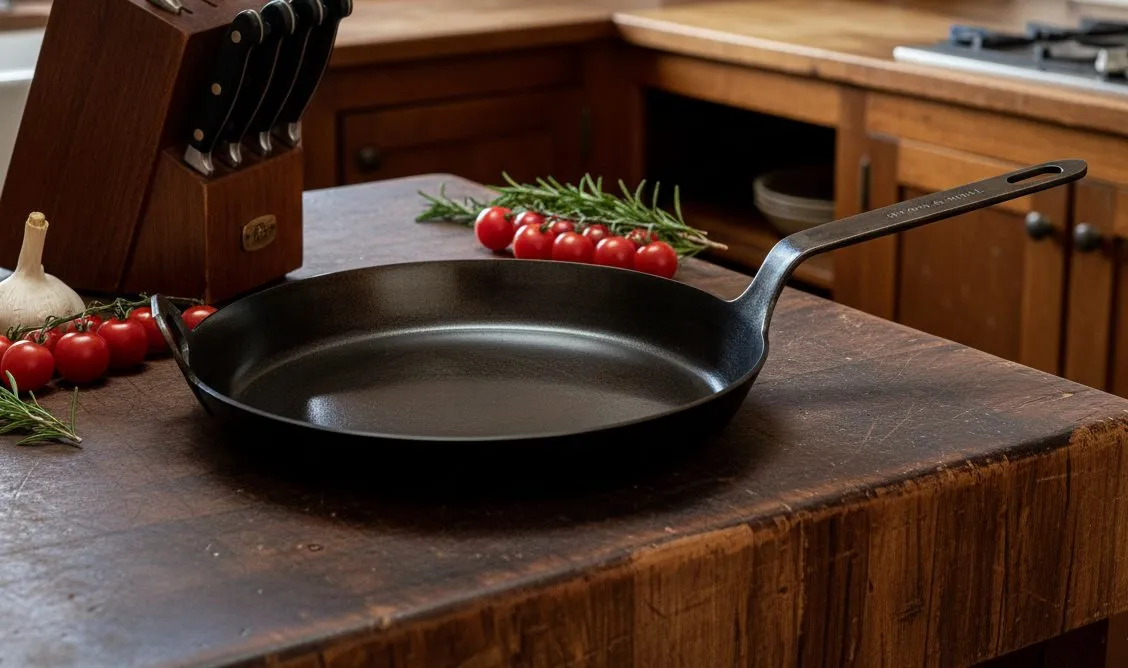
The finished article: a single piece of carbon steel, cooking face to handle. Photo courtesy of Brass & Steel.
Designing the die alongside the part
We did not simply receive a drawing and cut metal. We worked with Brass & Steel from the design stage, because a forming die and the part it makes have to be developed together. When a flat blank is pressed into a pan, the steel has to flow into the shape without tearing, thinning or wrinkling, and it springs back a little once the press opens. All of that has to be anticipated in the geometry of the die, not discovered on the shop floor.
Using our SolidWorks and CAMWorks setup, we iterated on the die geometry with the client so the draw radii, wall transitions and the handle form would let a single sheet move into its final shape cleanly. Getting that right on screen first is what keeps a heavy, expensive tool from needing rework after its first press.
Precise machining, where microns become ripples
A forming die is unforgiving in a way that many parts are not: its surface is transferred directly onto the product. Any tool mark, step between passes or slightly unfair curve on the die shows up as a blemish on the finished cooking surface. The pan can only be as smooth and true as the tool that forms it.
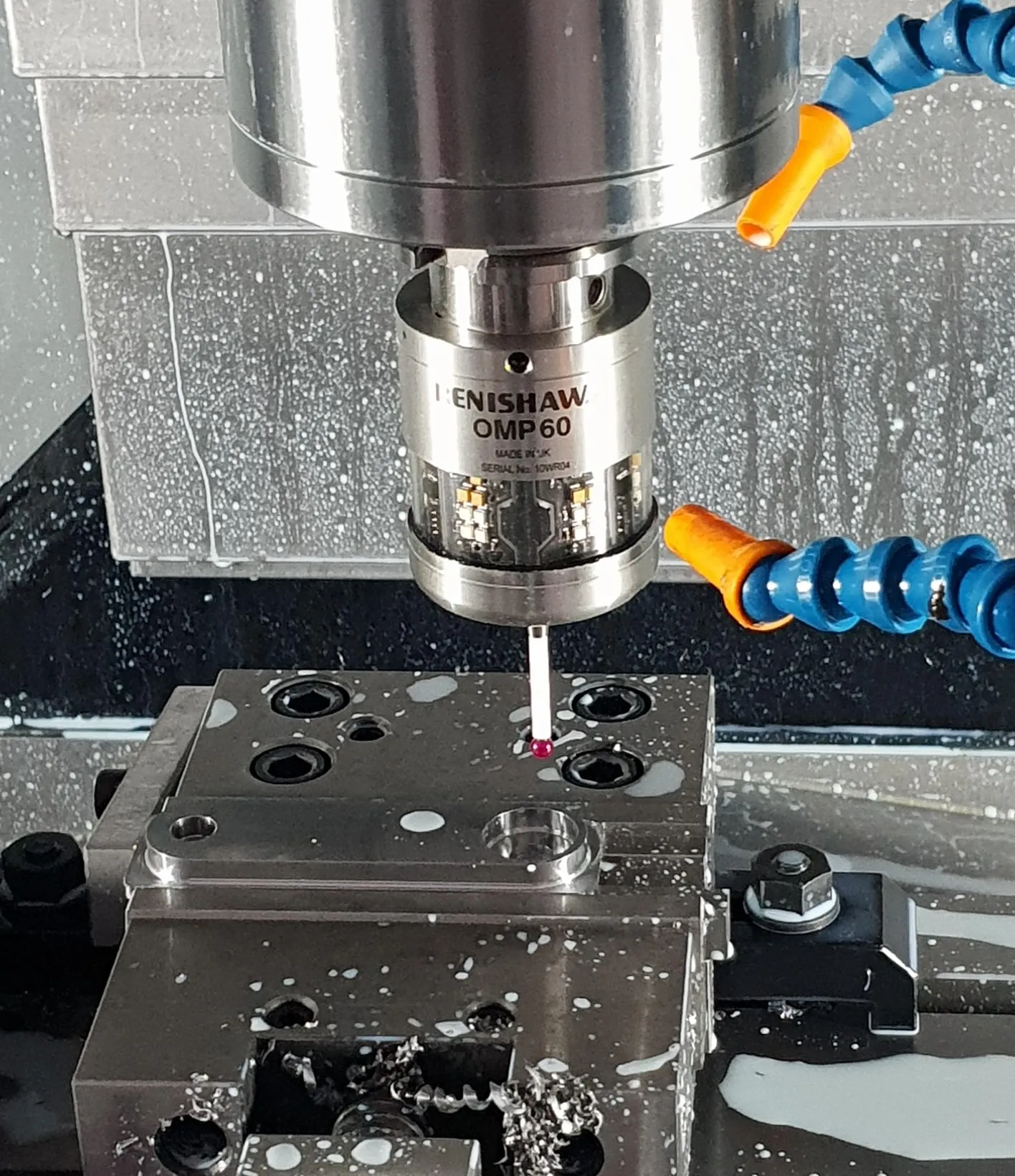
In-machine probing lets us verify the form as we cut it, not just after.
So the forming faces were machined on our 5-axis centres in as few setups as possible, keeping the whole contour in one reference frame, with fine stepovers and controlled cutting to leave a clean, fair surface ready for final finishing and polishing. We probed the form in the machine with our Renishaw systems and checked critical dimensions on TESA metrology equipment, so the shape we designed was the shape we actually cut.
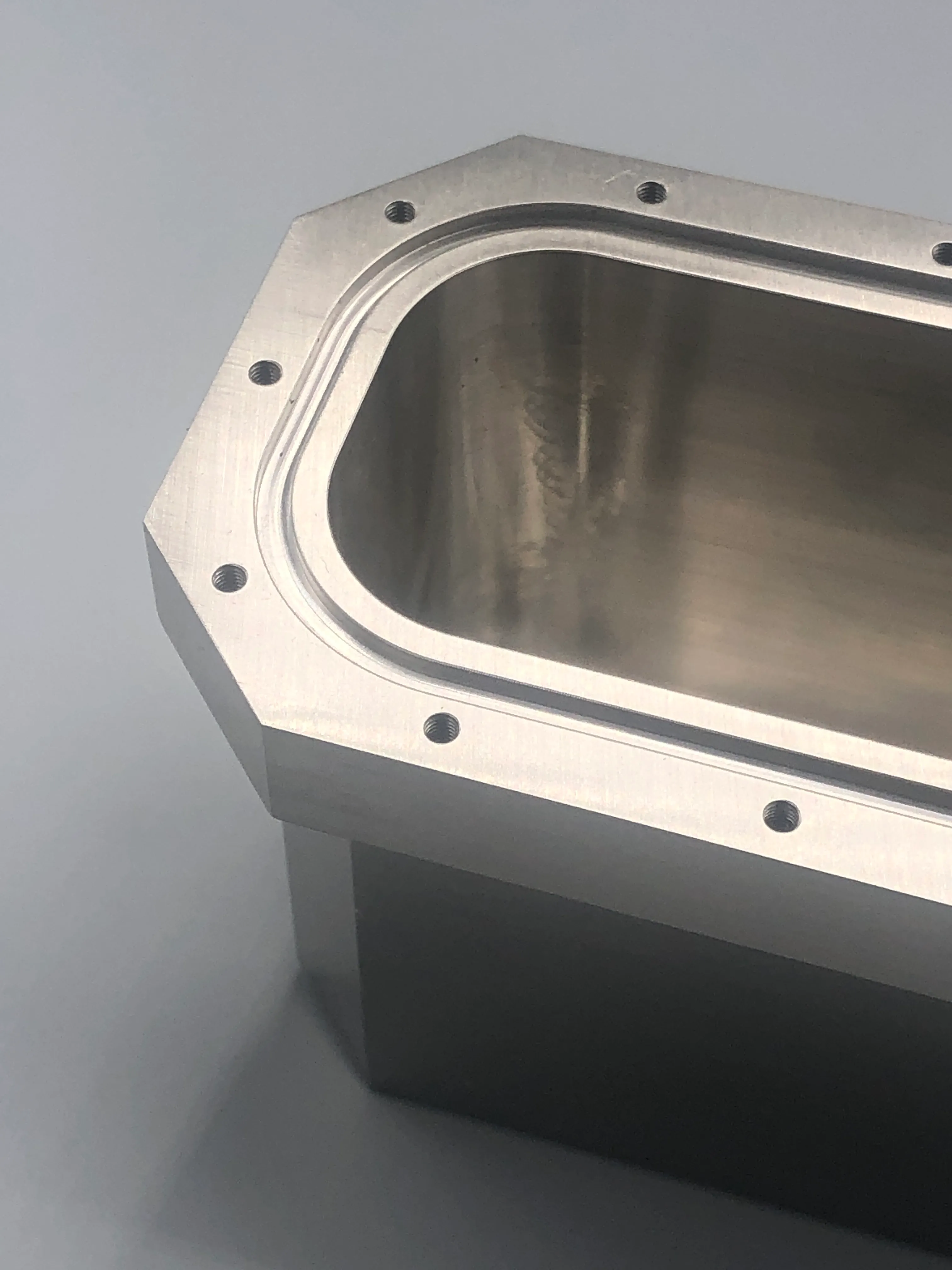
Deep, cleanly blended cavities are exactly the kind of internal form a press tool demands.
Fit: punch and die, matched all the way round
Press forming lives or dies on the clearance between the punch and the die. If that gap varies around the perimeter, the sheet draws unevenly, and you get thinning on one side and wrinkling on the other. Matching the two halves so the clearance stays consistent all the way round was a central part of getting the tool to produce a good pan rather than a scrapped one. We checked that fit both on the machine and against our metrology before the tool ever saw a press.
Repeatability: the same pan, thousands of times over
A one-off is one problem; a production tool is another. Brass & Steel build cookware meant to last a lifetime, so the die has to keep forming an identical pan across long production runs without the geometry drifting as it wears. That comes down to the right tool material and treatment, and to machining the form accurately enough that every pressing starts from the same baseline. All of it runs inside our ISO 9001:2015 quality system, so the tool is documented and traceable, and the results are consistent batch after batch.
From our floor to their kitchen
There is something rewarding about a job where the output is not a component buried in an assembly but a pan someone will cook on for decades. “One Pan. For Life.” starts a long way upstream, on the tool that forms it. You can see the finished cookware at Brass & Steel.
If you have a forming die, mould or press tool in mind, or a part that needs the same care from design through to finished metal, get in touch and tell us what you are making.